Greeting cards have always been a warm way to celebrate birthdays, holidays, and special moments. For many years, traditional paper cards were the most common choice. Today, animated ecards offer a more modern, colorful, and interactive way to send a personal greeting online.
Both options can be meaningful, but they create a very different experience, especially when the greeting is made for children.
What Are Traditional Greeting Cards?
Traditional greeting cards are printed cards that usually include a design, a short message, and space for a personal note. They can feel classic, personal, and sentimental, especially when they are handwritten.
Many people still love traditional cards because they can be kept as a physical memory.
What Are Animated Ecards?
Animated ecards are digital greeting cards that include animation, movement, music, characters, and sometimes personalized details such as a name, age, photo, or birthday message.
Instead of opening an envelope, the recipient opens a link and watches a short animated greeting on a phone, tablet, or computer.
Main Differences Between Animated Ecards and Traditional Cards
Feature | Animated Ecards | Traditional Greeting Cards |
|---|---|---|
Format | Digital and online | Printed and physical |
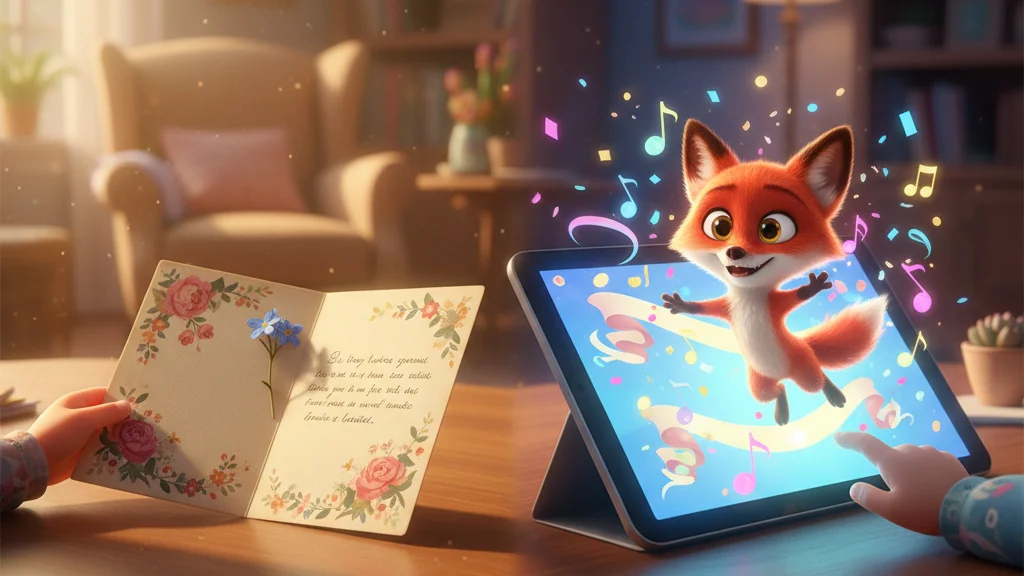
Experience | Animated, colorful, and interactive | Simple, classic, and personal |
Delivery | Sent by link, email, or message | Delivered by hand or mail |
Personalization | Can include names, photos, music, and themes | Usually includes a handwritten note |
Speed | Can be sent quickly | May require shopping and delivery time |
Best For | Fun surprises, children, remote greetings | Keepsakes, formal greetings, personal notes |
Why Animated Ecards Are Great for Kids
Children usually respond strongly to color, movement, sound, and storytelling. This is why animated ecards can feel more exciting for them than a regular card.
A child can watch characters dance, animals sing, balloons fly, or a magical birthday story unfold on the screen. When the card includes the child’s name or photo, the experience becomes even more personal.
Why Traditional Cards Still Matter
Traditional cards still have their charm. A handwritten message can feel emotional and thoughtful. Some families like to keep birthday cards in memory boxes or scrapbooks.
For grandparents, relatives, or formal occasions, a traditional card may still feel more familiar and meaningful.
Which One Should You Choose?
The best choice depends on the person receiving the greeting and the type of moment you want to create.
If you want something physical and sentimental, a traditional greeting card is a good option. If you want something fun, modern, easy to share, and exciting for children, animated ecards are a great choice.
For a child’s birthday, animated ecards can turn a simple greeting into a small celebration. They can include music, movement, playful characters, and a personalized birthday message that makes the child feel special.
Can You Use Both?
Yes. Many families choose to use both options. A traditional card can be given as a physical keepsake, while an animated ecard can be sent as a fun surprise before the party or shared with family members who live far away.
This creates the best of both worlds: the emotional value of a printed card and the excitement of a digital animated greeting.
Conclusion
Animated ecards and traditional greeting cards both have their advantages. Traditional cards are classic, personal, and physical, while animated ecards are fun, fast, colorful, and easy to personalize.
For children, animated ecards can be especially powerful because they turn a simple birthday message into an exciting visual experience. With the right theme, music, and personal details, an animated ecard can make any celebration feel more magical.
🎬 Make Their Birthday Truly Unforgettable
Free preview · Full movie just $7.99 · Ready in minutes